Showing posts with label Asia free port. Show all posts

Thursday, August 7, 2008

Indonesia's Kelimutu National Park


asia travel spots, Kelimutu National ParkFamous for it's coloured crater lakes, Kelimutu National Park also gain it's cool climate and panoramic view. It is still a puzzle for both scientists and locals how the lakes gained it's color and eventually change from time-to-time. The color of the three lakes are red, blue and white which eventually turns into black-brown, light green and black. The former red and blue lakes where separated by 200 centimeters wall of earth and located side-by-side while the former white lake is located to the west.


Declared as a national park on Feb. 26, 1992, this 1,051,000 square meter area not only consists of lakes but also mountains. It has Mount Kelibara as the highest peak and the whole area is located at East Nusa Tenggara, in the island of Flores, Indonesia. Rich in nature's diversity, the park became the haven of various species of birds, plants and endangered animals. This park is not only rich in natural resources but also in their cultural heritage as evidently showed in the local's traditional houses, weaving and dances.


Local folklore tells that the three lakes are gateways to different kinds of spirits. The first, having the name Tiwu Ata Mbupu is for the old people's spirit. The second, named as Tiwu Nuwa Muri Koo Fai is intended for the spirits of young people. The third, intended for evil sprits and fortune tellers is called Tiwu Ata Polo. The best time to visit the lakes is between the months of July to September or in spring time. Pack your bags now and head way to Indonesia to see another nature's wonder and asian destination.


(special thanks to IndonesiaLogue and Departemen Kehutanan Republik Indonesia for the information I used to make this article possible.)

Monday, July 14, 2008

Bangladesh's Sundarbans Mangrove


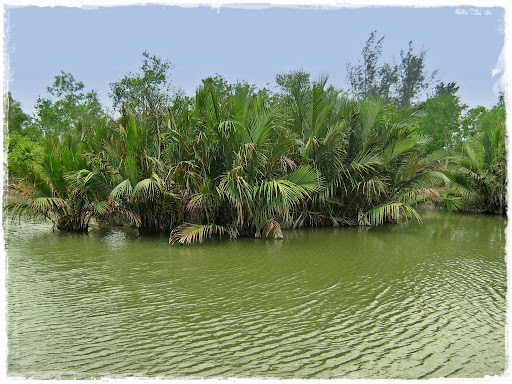
asia freeport, Sundarbans mangroveWith it's luscious mangrove trees and abundant flora and fauna, Sundarbans established itself as the largest block of mangrove forests in the world. Placed at the heart of Bangladesh and West Bengal, India this asian tourist spot is also a UNESCO's World heritage site since 1997. It is measured to be around 4,143 sq km and the water area surrounding it is 1,874 sq km circling the rivers, canals and small streams. The rivers here is where the salt water coming from Bay of Bengal and freshwater from River Ganges meet.


With it's diversified environment, it became the home of many birds and wild animals. One of which is Bengal tigers which is about 700 in population that males them the largest population of tiger population living in a certain area. There are other animals aside from tigers such as 270 species of birds, 42 species of mammals, 35 reptile species and eight amphibians apart from freshwater sharks and dolphins inhabiting the waters. That's why Bengali's are doing all their efforts to preserve this and also to protect themselves against tiger and crocodile attacks.


Just like any other nature reserve, it is now in the danger state as climate change affects the stability of the mangrove park. This may cause erosion, accretion, tidal waves and the rising of Ganga delta's sea level. It is also reported that this may damage the mangroves as well as the diversified forests in Sundarbans. It's high time for us to act now and save this one of a kind gift because before we know it, it is vanished due to our irresponsible acts towards nature.

Thursday, June 5, 2008

Myanmar's Kyaiktiyo Pagoda


Travellers and Buddhist devotees will find peace and solace in this asian destination found in Myanmar. Tranquility plus wonder, that's what you will see and experience in Kyaiktiyo Pagoda. A haven for Buddhist worshippers and devotees, this 18 ft. pagoda is situated at the top of the golden boulder. This golden boulder is at the verge of the hill. As you can see it, it is somewhat like rolling down the hill and that adds up to its appeal to tourists.

Located at Mon State, it ages 2500 years and legends says that Buddha's hair prevents the boulder from falling. The boulder is covered with golden leaves by which is believed to bring prosperous future for those who will place it. Men are only allowed to go near the boulder as they cross the short causeway to get access to the temple. Ovelooking the boulder you'll find candles lit as well as worshippers saying their prayers.


In able to reach the pilgrimage site, you need to trek 10 miles so tourists tend to ride a car, jeep or truck to get there. You can test it's ability of not falling down by passing a thread underneath the boulder. People believe that the rock don't touch the base, it's floating miraculously. You won't believe it but you must not miss that chance to see this great religious wonder.

Wednesday, May 21, 2008

Singapore's Night Safari


Safaris always fascinates me as a kid and now that I grew up, I still have that interest to go to Africa to have a real encounter with the wild. Not now that I've learned about Singapore's own version of safari but this time, it has a twist. Who will ever thought that it was possible to have your wild park adventure at night? Yes you can in Night Safari as it is the first in the world that caters visitors at night. Awarded as Singapore Tourism Awards Best Leisure Attraction Experience since 1994 up to 2006, you'll be overwhelmed by the experience you can get just by touring here.


Ecologically it's a good thing specially for nocturnal animals as the animals here are not disturbed at daytime. You can take a closer look at over 1040 animals not to mention the endangered kind in action. This idea is rooted from a wide response of people towards night tours and wholesome entertainment. With the budget of 63 million (in Singapore dollars), this 40 hectares nocturnal zoo came to life. As of now, this open-air zoo is maintained by Wild Reserves Singapore and it is open for 5 hours every night.


The zoo's setting of humid tropical forest gives it an authentic look of a typical African safari and stimulate the animals natural habitat. Visitors may not worry as protected by natural barriers instead of cages while they watch the animals. It is covered by two stretches, the walking trail and the tram rides. Just like any other parks, they offer other attractions such as tribal dances, fire eating stints and a night show which showcases the animals in the Night Safari. Dining is never a problem as it has food outlets and restaurants to satisfy your growling stomachs. One of which is Ulu Ulu Safari restaurant which serves authentic Western and Asian dishes. What you can do next is have it your way here at Night Safari. It is a sure way to enjoy the wild and realize the value of taking care our mother nature as well.

Thursday, April 3, 2008

Cambodia's Kompong Luong (Floating Village)

image from Tripadvisor Canada


We can only think of Cambodia as the land of Khmers, it's famous Angkor Wat temple and their breath-taking beaches, but who would ever thought that they got a floating village? Kompong Luong is located in the lakes of Pursat. The village consists of five communities with a total of almost 1300 families and 7000 people living in the area. Fact is, Khmer, Chinese and Vietnamese are living together in Kompong.


It is considered as Asia's version of Venice but instead of gondolas, Kompong is known to their wide range of quality pottery wares. You can buy it there along with other items such as vegetables and handicraft products that will make your visit worthwhile. If you will take a cruise at night, the village is so beautiful it looks like giant lamps in the midst of the lake. Aside from stores, there are floating restaurants, petrol stations, convenience stores, hospitals, karaoke bars and even garages can be found there.


So if you want to experience great fun living above water, approach your travel agent today take your love ones in Kompong Luong. While your sipping your ice coffee or take your lunch in the boat, you can check out the friendly people living in the floating village.