Showing posts with label asian travel. Show all posts

Wednesday, July 2, 2008

Lebanon's Jeita Grotto


asia travel, jeita grotto
Torn between war and the calmness of nature, Lebanon strives hard to establish tourism in their country. As they solve issues against the ranged parties, the country never fail to be a home for their tourists. One of which is Jeita Grotto, a subterranean river located at the Valley of Nahral-Kalb north of Beirut. Being in the run to be one of New Seven Wonders of the World, Jeita Grotto shows various rock formations, stone curtains and vaults of stalactites and stalagmites. The grotto has two parts, the upper cave where the gallery is located and the lower cave where the underground river is found.


Discovered by Reverend William Thomson in 1836, this asian tourist spot was maintained by Mapas, a German company that renovate and maintains the cave. The cave was closed when the Lebanese civil war arise in 1978 leading the use of both upper and lower galleries to store ammunitions and the building outside the cave served as the office for military. It is opened again for public in 1995 and became one of Lebanon's treasured destinations.


One of the cave's attraction includes the Pantheon where you can write your name and your experience in touring the cave on a piece of paper, put it in a bottle, seal it then place it on top of the stalagmite. This stalagmite is found at the lower cave together with other stalagmites such as the Grand Chaos and the Shangri-la. In the upper cave, you will find the White Chamber where you can see the longest stalagmite in the world that measures 8.2 metres (27 ft) along with other formations such as columns, mushrooms, ponds, curtains and draperies. Once you get here, you will wonder how nature sculpted this one of a kind masterpiece.


Monday, June 16, 2008

Iran's Chogha Zanbil

Chogha Zanbi,asia destinationsZiggurats are one of Persia's (now Iran) greatest contribution in the ancient world. This temple-tower facade serves as a place where sacrifice for the gods were being held. It is also believed that this is were the gods dwell to get close with humans. Unfortunately, some of this remarkable pyramids where destroyed by natural calamities and war but few of them still survived until now. In fact, one of which is Chogha Zanbil, the one that you can find in the province of Khuzestan. It is considered the most dramatic representation of the Elamite architecture and built in 1250 BC by the King Untash-gal of Elam.


Chogha Zanbi,asia destinationsChogha Zanbil was built to honor Inshushinak, one of Elam's great gods. It is composed of five towers of different height each constructed one side of the other. The inner area that occupies the main ziggurat is intended for the main god while the middle area which consists of eleven rooms s intended for the lesser gods. In the outside area, you can find royal palaces and funerary place where the five subterranean tombs are placed.


The construction of the great canal to supply water from the river is still in use as water source is inadequate for the people's needs. The unused bricks left at the site only proves that Chogha Zanbil is left undone until the Assyrian invaded the city. Archaeological excavasions took place between 1951 to 1962 just to rediscover the fallen city. All their efforts were paid well as UNESCO declared Chogha Zanbil as a world heritage site in 1970. Visitors of this site try to relive the glory of the ancient kingdom as well as to be amazed by human creativity, that people of that era can think of this exceptional masterpiece.

Wednesday, May 28, 2008

Laos' Plain of Jars

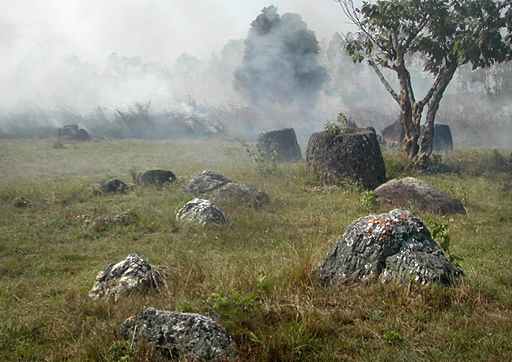
asia travel spots, plain of jarsConsidered one of the poorest nations in Southeast Asia, you may think that Laos has nothing to offer being a tourist destination. That didn't hinder tourists to discover this archaeological wonder that has the makings of being an asia travel spot. Haven't you heard, there's this historical landmark that consists of thousands of jars scattered in the highlands of Laos called Plain of Jars. Situated at Xieng Khouang plain, this Laos pride consists of thousands of stone jars big and small distributed in the place.


It is believed that this stone jars ages from 1,500–2,000 years and older. According to a local folktale, the emerging of jars began when the king of the giants Khun Jeuam fought and won a battle against the evil ruler Chao Angka. The king, whose fond of throwing parties brew and store huge amounts of lao lao rice wine in this huge stone jars. When the archaeologists studied the jars, they have found burned bones, beads and iron tools leading them to the conclusion that these jars were used as giant urns to bury the dead. Another mystery yet unsolved is how the jars are made. Locals believed that these jars were made from clay, sand, sugar, and animal products mixing together to form a cement-like mixture.


Since the time of Pathet Lao-American war began, most of the jars were destroyed by bomb explosions leaving bomb craters and trench systems in the area. This makes the area dangerous until today due to unexploded bombs that was a result of massive bombardment of the recent wars. In fact only three sites of the plain is safe for visitors and locals alike. Aside from the huge stone jars, you can also found original artifacts like Buddhist statues, colonial items and scraps from the exploded bombs in the US war. Like no other, Plain of Jars is the mute witness of Laos' historical occurrence in the past and in the years to come.


Wednesday, May 14, 2008

Azerbaijan's Gobustan Petroglyphs

asian travel, Gobustan PetroglyphsYou may think that Azerbaijan didn't exist in your travel destination maps but it is. It has so much to offer and one of which is Gobustan State Reserve who happens to be one of UNESCO's heritage site. Established in 1966, it was declared a protected area since in the caves lies the ancient carvings and rock paintings that is believed to be more than 600,000 in number. The paintings are mostly images of what kind of life early settlers of Azerbaijan had as well as animals, primitive dances, bullfights and others dated from 5,000 to 20,000 years way back.


This nature wonder were only discovered through accident when a group of men go in there to quarry for stones in 1930. Since the area are abundant in boulders and rock formations, one quarry worker noticed the unusual carvings on the rocks. They also discovered these man-made caves where more of the drawings can be found. One of the scientist studied these paintings is the world-renowned anthropologist Thor Heyerdahl.


Apart from petroglyphs, there is also this musical stone known as Gaval Dash. It makes a tambourine-like sound when it is hit in different points. It is composed of big flat stones with 3 supporting stones. There are also cup-like hollows found there which is believed to be used to gather water, a vessel for preparing blood for sacrifice and others not to mention archaeological materials like hunting tools, utensils and animal bones. If you're into history mood, play like an archaeologist or geologist and plan your vacation here at Gobustan State Reserve particulary in it's caves and mud volcanoes. There's nothing like discovering the things we didn't know existed at that time.


Tuesday, May 6, 2008

Egypt's Ras Mohammed National Park

asian travel spots, Ras MohammedEgypt was known for its majestic pyramid structures, high and mighty pharaohs and it's amazing sand dunes. Who will ever thought that a diver's haven will emerge here in a land of full of sand and scarce water supply? Yes, Ras Mohammed or Cape Mohammed is one of Egypt's important protected area. With a variety of flora and fauna's best, Ras Mohammed showcase marine life in different forms.

This extra-ordinary setting lies in at the south extreme of Sinai Peninsula, facing Gulf Suez and Gulf of Aqaba and included in the tourist region of Red Sea Riviera. Declared as a park and protected area in 1983, this asian travel spot has a name that literally means Mohammed's head. The enormous wildlife is not only present in water but also in land as there are mountains and wadis, gravel and coastal mud plains and sand dunes that will satisfy your panoramic viewing.


This place is not only suitable for diving but also in other activities like snorkeling, bird-watching and nature-tripping. In fact, there is the Mangrove channel where you can view migratory and resident birds. There's also the Eel Garden where you can find it's large population of garden eels and the Shark Observatory where you can have a close encounter with sharks of different kinds.
This park provides excellent and calm experience to their visitors. With this and other nature's reserves around the world, it made us think twice to save this place called Earth since this is the only place and paradise we can live in.

Thursday, April 10, 2008

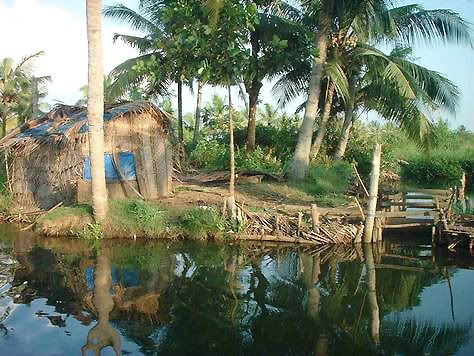
India's Kochi Backwaters

image from Tourism of India
If there's one greatest contribution India has in the world is it's backwaters. They are the only place in the globe where you can find this unique water landmark. Tagged as "Queen of Arabian Sea", Kochi or Cochin receive millions of visitors every year. Being Kerala's industrial and commercial capital, it's ports where the busiest from the transport of goods to every hour cruises of tourists in and around the metropolis. A cluster of islands surrounding Vembanad Lake, it is a picturesque port in ancient times putting Arabian, Chinese, Dutch, Portuguese and British a good setting for trade and commerce.


Due to this, these foreign traders leave their own heritage in the island. One of which is Bolghatty Palace, a panoramic Dutch Palace that has a nice golf course and green lawns. Chinese also embarked their legacy by introducing their fishing nets which is only found in Fort Kochi. Aside from this, there's also Willingdon Island, a large man-made island which comprises of sand and dredged to the backwaters that will deepen the Kochi Port. There is also the Elephant Training Center in which you will see elephants in action.


You can enjoy the serenity of this place as it has no pubs or nightlife. Instead, wines are served in the hotel lobbies but if you want to have a taste of their local wine, you can have it in little shops located in the city. So spend your vacation the Indian way and go to Kochi backwater. This is another one great chance we shouldn't dare to miss.

Monday, March 24, 2008

Malaysia's Snake Temple

Snake Temple in Malaysia
image from China Daily

If you will hear it the first time, you may think that it's a temple that is designed like a cobra, or snakes of different kinds lie in this temple , much worse, they adore and worship snakes. Snake Temple lived up to its name. In fact, pit vipers (without venoms) of different kinds are present in the temple along with burning incense and statues of Gods and Deities honored in the temple.


The temple was built to honor the deity Chor Soo Kong. He was a Buddhist monk who lives an ascetic life in the mountains and gives free medical services for the poor. When a drought struck the town of Qing-Xi in Fujian, his prayers did miracles saving the town. It was believed that after his temple was built, snakes swarmed in but they are tamed by Cheng-Swee_Zu_Shi and whoever visits the temple isn't attacked by snakes.

As of today, another hall was added in order to honor the Goddess of Mercy Kuan Yin. It is located at the back of the original facade. Visitors are still warned to handle snakes because even they are de-venomized, they still got their fangs. You can get there by riding public transportation like bus.